The Gratitude Ledger: What Your Delivery Ninja Actually Takes Home (and What They Should)
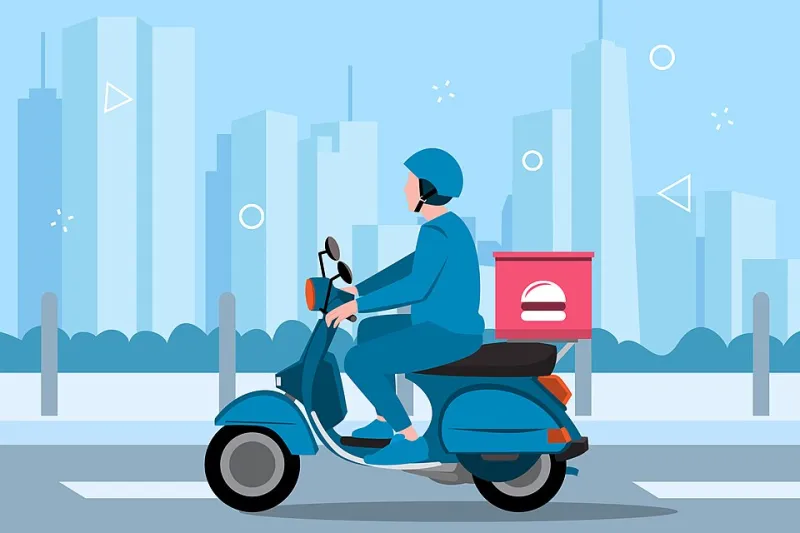
Photo: Meanwell Packaging, CC BY 2.0, via Wikimedia Commons
Let's be honest: the tipping screen is the most stressful three seconds of the American takeout experience. You've just spent ten minutes deciding between the spicy tuna crunch and the katsu sando, and now a tablet is staring you down, offering 15%, 18%, or a number so aggressive it feels like a dare. You hover. You sweat. You wonder if the driver can see your choice in real time (they can't, but the anxiety is real).
At Ninja House To-Go, we spend a lot of time thinking about what happens after the kitchen. So we did some recon. Here's the straight story on delivery tipping in the US — and a formula so simple you'll never panic at the checkout screen again.
First, the Uncomfortable Truth About What Drivers Earn
Most delivery drivers in the US are independent contractors, which is a polite way of saying the app covers the bare minimum and everything else is on you. Base pay per delivery often lands between $2 and $4, depending on the platform and the market. After gas, wear on the car, insurance, and the self-employment taxes that quietly eat a chunk of every dollar, that base pay is not a living. It's a rounding error.
The tip isn't a bonus on top of a salary. For most drivers, the tip is the salary. Once you understand that, the whole guilt-vs-generosity debate gets a lot simpler.
The Flat Fee Trap: When Your $3 Tip Shrinks
Here's something the apps don't advertise: many platforms now use "batched" or adjusted payouts, where the tip you see on your receipt isn't always the full picture, and flat delivery fees can mask how little actually reaches the driver. A $3 tip on a $60 family feast feels different than a $3 tip on a solo burrito-sushi hybrid — but to the driver, the $60 order took longer to pack, carried farther, and weighed more.
The old "tip a percentage of the bill" rule made sense when a human was waiting your table. Delivery is a different job. The driver's effort scales with distance, weather, stairs, and order size — not with how much wagyu you ordered. So we recommend a hybrid approach.
The Ninja Formula: Simple, Slightly Stealthy, Always Fair
Here it is, no abacus required:
- Start with $4 flat. That's the baseline for any standard delivery — a reasonable thank-you for someone driving your dinner through traffic.
- Add $1 per mile beyond three. Distance is effort. A driver crossing town in the rain earned that dollar.
- Add $2 for bad conditions. Rain, snow, ice, or that one windstorm that knocks over every trash can in the neighborhood.
- Add $2 for big or complicated orders. Six drinks, a party platter, or anything requiring the balancing skills of a circus performer.
- Round up if they crushed it. Delivered to the right door, texted ahead, handled your gate code like a lockpick? That's craft. Reward craft.
A typical order for most people lands between $4 and $8. That's it. No percentages, no mental math at 9 PM.
Quick Quiz: What's Your Tip?
Test yourself against three real-world scenarios:
Scenario A: Tuesday, clear skies, one mile, single spicy tuna roll. Answer: $4 flat. Done. Enjoy your roll.
Scenario B: Friday night downpour, five miles, a family bento bundle with extra sauce cups. Answer: $4 + $2 (distance) + $2 (weather) + $2 (size) = $10. That driver just earned their rain jacket.
Scenario C: Two miles, sunny, but you live on the third floor of a walk-up with a gate code that changes weekly. Answer: $5–$6. Stairs and secret codes count as conditions, ninja rules.
But What About Tip Fatigue?
We hear you. Between coffee tablets, bakery jars, and every checkout screen in America now asking for a gratuity, tipping exhaustion is real. Our take: delivery is one of the few places where the tip goes directly to a person performing a physical, weather-exposed, traffic-navigating service — often within 30 minutes of your hangry text. If you're going to tip anywhere, tip here. Skip the tip jar at the self-checkout kiosk. It doesn't have feelings, and it definitely can't climb your stairs.
The Bottom Line
Your delivery ninja took the order, braved the roads, and found your apartment when your own friends can't. A few thoughtful dollars isn't charity — it's the actual price of the service, just paid on the honor system. Tip like the fee screen is honest, and everyone eats better.
Now go forth and order the katsu sando. The math is handled.